

How Effective Are Online OT Programs? Expert Insights
Occupational therapy has evolved dramatically over the past decade, with online education emerging as a viable pathway for aspiring practitioners. The question isn’t whether online occupational therapy courses exist—they do—but rather how effectively they prepare students for real-world clinical practice. This comprehensive analysis examines the evidence, challenges, and opportunities within the digital education landscape for occupational therapy professionals.
The shift toward virtual learning has been particularly pronounced in healthcare education, driven by technological advances and the pandemic’s acceleration of digital adoption. However, occupational therapy presents unique challenges due to its hands-on, tactile nature and the requirement for supervised clinical practice. Understanding the nuances of online OT education requires examining both quantitative outcomes and qualitative insights from educators, students, and employers.
Effectiveness of Online OT Education Models
Research into the effectiveness of online occupational therapy programs reveals a nuanced picture. The American Occupational Therapy Association (AOTA) has documented that properly structured online programs can deliver comparable learning outcomes to traditional in-person education when implemented with rigorous standards. A study published in the Journal of Occupational Therapy Education found that students in hybrid OT programs achieved similar scores on foundational knowledge assessments as their traditional counterparts, though practical skill development required supplementation through intensive in-person labs.
The effectiveness of these programs depends heavily on several critical factors. First, the quality of curriculum design matters significantly—programs that intentionally integrate synchronous and asynchronous components tend to perform better than those simply converting classroom lectures to video format. Second, the availability of robust technical infrastructure ensures reliable access to course materials and virtual learning environments. Third, the expertise of instructors in facilitating online learning, not just clinical expertise, substantially impacts student success.
When examining occupational therapy masters programs offered online, accredited institutions demonstrate higher effectiveness rates. These programs typically employ experienced faculty who understand both occupational therapy practice and online pedagogy. The investment in course development, learning management systems, and student support services directly correlates with measurable learning outcomes.
Key effectiveness indicators include:
- NBCOT certification exam pass rates (typically 85-95% for accredited programs)
- Graduate employment rates within six months (generally 90%+ for quality programs)
- Employer satisfaction with clinical competency of graduates
- Student retention and completion rates
- Time to licensure and credential attainment

Hybrid Learning Approaches in Occupational Therapy
The hybrid model has emerged as the gold standard for occupational therapy education, combining the flexibility of online learning with the necessity of in-person clinical skill development. This approach typically allocates 60-70% of coursework to online delivery and 30-40% to intensive, on-campus or clinical laboratory experiences. Occupational therapy assistant programs have particularly benefited from this structure, as it allows working professionals to pursue credentials while maintaining employment.
Hybrid programs leverage online platforms for theoretical content—anatomy, neuroscience, evidence-based practice, and professional ethics—while reserving in-person time for skills labs, simulations, and supervised practice. This strategic allocation maximizes efficiency and cost-effectiveness. Students gain flexibility in accessing lectures and readings while ensuring they receive adequate hands-on training in controlled environments before clinical placement.
The effectiveness of hybrid models is supported by pedagogical research demonstrating that combining modalities activates multiple learning pathways. Visual learners benefit from recorded demonstrations and animations, kinesthetic learners engage with simulations and labs, and collaborative learners participate in group projects across both environments. The result is more comprehensive learning that accommodates diverse learning styles.
Clinical Practicum and Hands-On Training
Clinical practicums represent the most critical component of occupational therapy education, and this is where online programs face their greatest challenges and opportunities. Students must complete supervised fieldwork—typically 24 weeks for master’s programs—in actual clinical settings. Online delivery cannot replace this requirement; however, it can enhance preparation for clinical practice through virtual simulation and pre-practicum training.
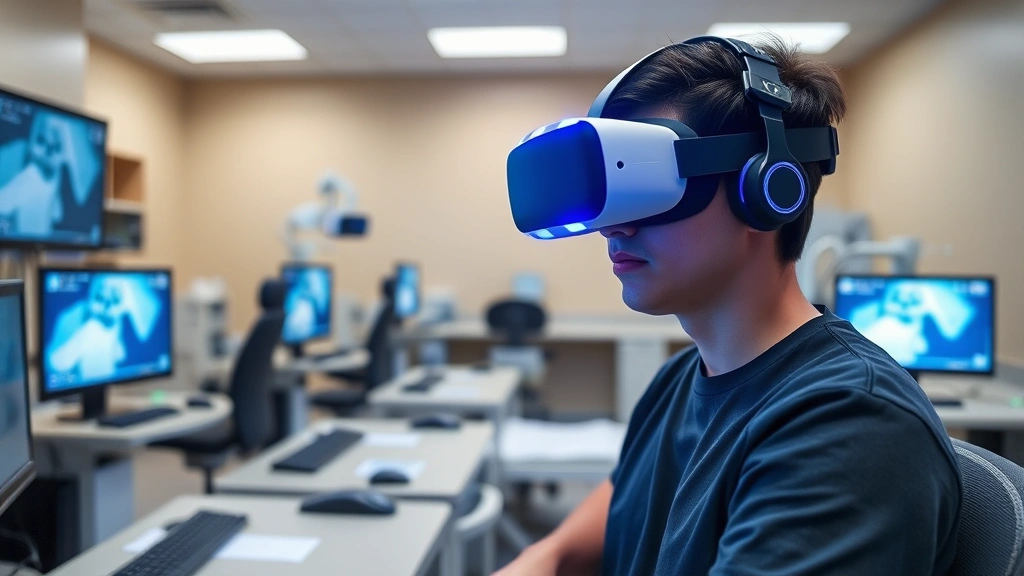
Advanced simulation technology is transforming how programs prepare students for fieldwork. Virtual reality simulations allow students to practice therapeutic techniques, client interactions, and clinical decision-making in controlled environments before encountering real patients. Some leading programs use motion-capture technology and haptic feedback devices to create realistic tactile learning experiences. These innovations bridge the gap between theoretical knowledge and practical application.
Fieldwork education itself remains primarily in-person and supervised. Programs coordinate placements with clinical facilities, ensuring students work under licensed occupational therapists. The quality of fieldwork supervision and the clinical facility’s commitment to education significantly impact student outcomes. Online programs must maintain strong relationships with clinical partners to secure quality placements, which requires additional administrative effort compared to programs with established local networks.
The integration of pre-practicum preparation through online modules has proven effective in accelerating student learning during fieldwork. Students arrive at clinical sites better prepared with background knowledge, reducing the orientation period and allowing more time for skill development and supervised practice.
Accreditation Standards and Quality Assurance
The Accreditation Council for Occupational Therapy Education (ACOTE) maintains rigorous standards for all OT programs, regardless of delivery method. These standards ensure that online and hybrid programs meet the same educational quality benchmarks as traditional programs. Programs seeking accreditation must demonstrate compliance with specific competency requirements, faculty qualifications, curriculum standards, and assessment methods.
ACOTE’s standards include explicit requirements for hands-on skill development and supervised practice, which necessarily limits the proportion of purely online content. Programs cannot be delivered entirely online at the entry-level master’s degree—a minimum of intensive in-person components is mandatory. This regulatory framework protects educational quality and ensures graduate competency.
Quality assurance mechanisms include regular program reviews, student outcome tracking, and continuous improvement processes. Accredited programs undergo comprehensive reviews every seven years, with annual reporting of key metrics. These include graduate employment rates, certification exam pass rates, and employer feedback. This transparent accountability system helps prospective students identify high-quality programs.
The distinction between accredited and unaccredited programs is crucial. Only graduates of ACOTE-accredited programs are eligible to sit for the NBCOT certification examination required for licensure. Therefore, prospective students should verify accreditation status before enrolling in any online occupational therapy program.
Student Outcomes and Professional Readiness
Comprehensive data on graduate outcomes from online and hybrid OT programs demonstrates strong professional readiness. Research from multiple institutions shows that graduates of accredited hybrid programs achieve certification exam pass rates of 85-95%, comparable to traditional program graduates. Employment outcomes are similarly positive, with 90%+ of graduates securing positions within six months of graduation.
Employers report satisfaction with graduates’ clinical competency and professional preparation. A survey of hiring managers at healthcare facilities found no significant differences in job performance between graduates of online/hybrid programs and traditional programs after an initial six-month adjustment period. This suggests that the online delivery method, when properly implemented, does not compromise clinical competency.
Student satisfaction with online and hybrid programs is notably high, particularly among working professionals and those with caregiving responsibilities. The flexibility to balance education with other commitments is a significant advantage. However, students do report challenges with isolation, time management, and the intensity of hybrid programs that compress in-person experiences into intensive blocks.
The career pathways available to online OT program graduates are identical to those of traditional program graduates. Graduates are equally eligible for positions in hospitals, rehabilitation centers, schools, mental health facilities, and private practice. Some graduates pursue advanced specializations through post-professional education, which is increasingly available online as well.
Long-term career outcomes show that online program graduates advance at similar rates as traditional program graduates, with comparable salary trajectories and professional advancement opportunities. This indicates that the educational pathway does not create lasting disadvantages in the profession.
Technology Tools Transforming OT Education
Educational technology has fundamentally enhanced the delivery and effectiveness of online occupational therapy programs. Learning management systems like Canvas and Blackboard provide centralized platforms for course materials, assignments, and communication. Video conferencing tools enable real-time instruction and interaction despite geographic separation.
Specialized software tools are particularly valuable for OT education. Simulation software allows students to practice clinical documentation, treatment planning, and assessment administration. Virtual reality applications create immersive learning experiences where students can practice therapeutic techniques and client interactions. These technologies complement traditional lectures and readings, creating multisensory learning experiences.
Asynchronous video content, when professionally produced, provides advantages over live lectures. Students can review complex procedural content multiple times, slow down demonstrations, and learn at their own pace. High-quality production with multiple camera angles, animations, and visual aids enhances understanding of anatomical concepts and clinical techniques.
Collaboration tools facilitate peer learning and group projects across distributed student populations. Discussion forums, shared documents, and virtual whiteboards enable students to engage with classmates and instructors in meaningful ways. These interactions, while different from in-person collaboration, can be equally effective for developing communication and teamwork skills.
Challenges Specific to Online OT Programs
Despite their effectiveness, online occupational therapy programs face several significant challenges that prospective students should understand. The most obvious challenge is the limitation of hands-on skill development in virtual environments. While simulations have improved dramatically, they cannot fully replicate the tactile feedback and real-world complexity of actual client interactions. This limitation necessitates the in-person components that extend program duration and cost.
The relationship between online education and the difference between PT and OT therapy is worth noting—both professions face similar challenges with online delivery, though occupational therapy’s emphasis on functional activities and client-centered practice requires particularly robust hands-on training. Programs must carefully structure their curricula to address this distinction.
Scheduling challenges arise from the need to coordinate intensive in-person experiences with students’ work and personal obligations. Many hybrid programs require multiple week-long intensive sessions per year, which can be difficult for working professionals with inflexible schedules or caregiving responsibilities. Some programs address this through staggered schedules or distributed intensive blocks, but logistical complexity remains.
Technology barriers affect some students, particularly those with limited internet bandwidth, older computers, or unfamiliarity with digital tools. While these barriers are decreasing, they can still impact access and success for some populations. Quality programs provide technical support and accommodations to address these challenges.
The development and maintenance of clinical partnerships is more demanding for online programs. Fieldwork coordinators must cultivate relationships with clinical sites across broader geographic areas, potentially increasing administrative burden. Some students may face limited options for practicum placement, particularly those in rural areas or with geographic constraints.
Faculty recruitment and retention can be challenging, as online education requires different skill sets than traditional teaching. Instructors must be trained in online pedagogy, technology use, and virtual facilitation. This investment in professional development is essential but requires institutional commitment and resources.
Career Pathways After Online OT Education
Graduates of online and hybrid occupational therapy programs pursue diverse career paths identical to those of traditional program graduates. Many enter direct client care roles in hospitals, rehabilitation facilities, and specialized clinics. Others work in schools, providing occupational therapy services to students with disabilities. Community mental health, geriatric care, and pediatric practice are popular specializations.
Some graduates transition into leadership and administrative roles within healthcare organizations. Their education provides the clinical foundation necessary for roles such as therapy department manager, clinical director, or quality improvement specialist. The online education pathway does not limit these career progressions.
Advanced specialization through related fields like physical therapy or complementary credentials is available to OT graduates seeking expanded practice scope. Some pursue board certification in specialized areas such as hand therapy, gerontology, or mental health. These advanced credentials enhance career prospects and earning potential.
Entrepreneurship is increasingly common among OT graduates, including those from online programs. Many establish private practices, consulting firms, or specialized clinics. The professional knowledge and skills acquired through online education provide adequate foundation for independent practice, though business management and professional development beyond the degree are necessary.
Research and academic careers are also available, though less common. Some graduates pursue doctoral education in occupational therapy, public health, or related fields. The evidence-based practice emphasis in quality online programs prepares students for research involvement and scholarly activity.
International career opportunities exist for US-licensed occupational therapists, though credential recognition varies by country. Some graduates work internationally in humanitarian contexts, providing occupational therapy services in underserved regions. The flexibility and accessibility of online education can be particularly valuable for professionals pursuing global health interests.
FAQ
Are online occupational therapy programs accredited?
Quality online and hybrid OT programs are accredited by ACOTE, the same accrediting body that accredits traditional programs. Accreditation status is essential—only graduates of accredited programs are eligible for NBCOT certification and licensure. Always verify accreditation before enrolling.
Can you complete an occupational therapy degree entirely online?
No. Entry-level master’s degrees in occupational therapy cannot be completed entirely online due to accreditation requirements for hands-on skill development and supervised clinical practice. Hybrid programs with intensive in-person components are the closest option. Some post-professional and continuing education courses are available online, but entry-level education requires in-person components.
How long do online OT programs take?
Online and hybrid master’s programs typically require 24-36 months to complete, similar to traditional programs. The extended timeline compared to some online degrees reflects the hands-on and clinical requirements inherent to occupational therapy education. Some accelerated programs condense this to 18-24 months but require full-time intensive commitment.
What is the cost of online OT programs?
Tuition for online and hybrid programs ranges from $40,000 to $120,000 total, comparable to traditional programs. Some online programs may be slightly less expensive due to reduced facility overhead, while others are equally expensive. Financial aid, scholarships, and employer sponsorship are often available. When evaluating cost, consider the value of flexibility and accessibility that online programs provide.
Do employers prefer graduates of traditional or online OT programs?
Research indicates no significant preference. Employers evaluate candidates based on clinical competency, certification status, and professional skills, not the delivery method of their education. Graduates of accredited hybrid programs are equally competitive for positions as traditional program graduates.
How effective is clinical simulation in online OT programs?
Clinical simulation is increasingly effective for foundational skill development and procedural practice. However, simulation cannot fully replace hands-on experience with real clients. Quality online programs use simulation strategically to prepare students for fieldwork, where real clinical experience occurs. The combination of simulation and supervised fieldwork provides comprehensive training.
What technology do I need for online OT programs?
You’ll need a reliable computer with video conferencing capability, stable internet connection, and basic productivity software. Some programs may require specific simulation software or virtual reality applications. Most programs provide technical support and can recommend affordable equipment options. Investigate specific technology requirements when evaluating programs.
Can occupational therapy and speech education be combined online?
While occupational therapy and speech-language pathology are distinct professions with separate accreditation requirements, some universities offer dual-degree programs. These programs are typically longer and may combine online and in-person components for each discipline. Research institutions offering integrated or concurrent degree options if you’re interested in both fields.