How Therapy Rooms Enhance Mental Health Sessions
The physical environment where mental health treatment occurs plays a surprisingly powerful role in therapeutic outcomes. A well-designed therapy room is far more than just a space where conversations happen—it serves as a fundamental tool that influences client comfort, trust, and healing. Research consistently demonstrates that environmental factors including lighting, temperature, furniture arrangement, and acoustic properties directly impact the effectiveness of psychological interventions and the therapeutic alliance between clinician and client.
Mental health professionals have long recognized that the setting influences the quality of care delivered. Whether you’re seeking therapy and wellness resources or working as a practitioner, understanding how to optimize your therapy room environment can significantly enhance treatment outcomes. This comprehensive guide explores the science behind therapeutic spaces and provides actionable strategies for creating rooms that truly support healing.
The Psychology of Therapeutic Environments
The concept of environmental psychology in healthcare settings has gained substantial research attention over the past two decades. Studies published in leading psychology journals demonstrate that clients entering well-designed therapy rooms show measurably lower cortisol levels—the primary stress hormone—compared to those in poorly designed spaces. This physiological response matters because clients who feel physically safe and comfortable are more likely to engage authentically in therapeutic work.
A therapy room fundamentally serves as a holding environment, a term coined by psychoanalyst D.W. Winnicott to describe spaces that provide psychological safety and containment. When clients enter a thoughtfully designed therapy room, they unconsciously receive messages about care, professionalism, and respect. The environment itself becomes part of the therapeutic intervention, communicating that their wellbeing matters before a single word of conversation is exchanged.
Research from environmental psychology demonstrates that natural elements, proper spatial organization, and attention to sensory details reduce client anxiety by up to 30 percent. This is particularly important for individuals with trauma histories, anxiety disorders, or autism spectrum conditions who may be hypersensitive to environmental stimuli. The therapy room becomes a corrective emotional experience where clients learn that they can exist in a space designed specifically for their comfort and safety.
Essential Design Elements for Therapy Rooms
Creating an effective therapy room requires attention to multiple interconnected design elements working in harmony. The room should measure at least 120 square feet to provide adequate personal space without feeling cramped or claustrophobic. This size allows for proper furniture arrangement, movement during certain therapeutic modalities, and psychological spaciousness that clients instinctively recognize as safe.
The foundational design elements include:
- Adequate ventilation and temperature control: Maintaining a cool temperature (68-72°F) with good air circulation prevents the stuffiness that triggers anxiety and restlessness
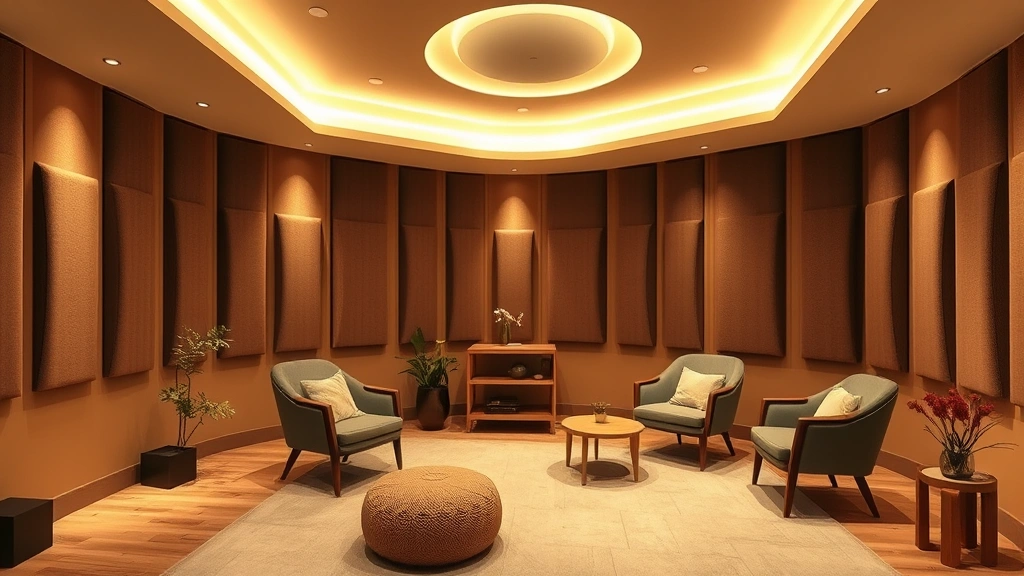
- Sound insulation: Walls with proper acoustic treatment ensure confidentiality and prevent external noise from disrupting sessions
- Natural light access: Windows with adjustable coverings provide circadian rhythm support while maintaining privacy
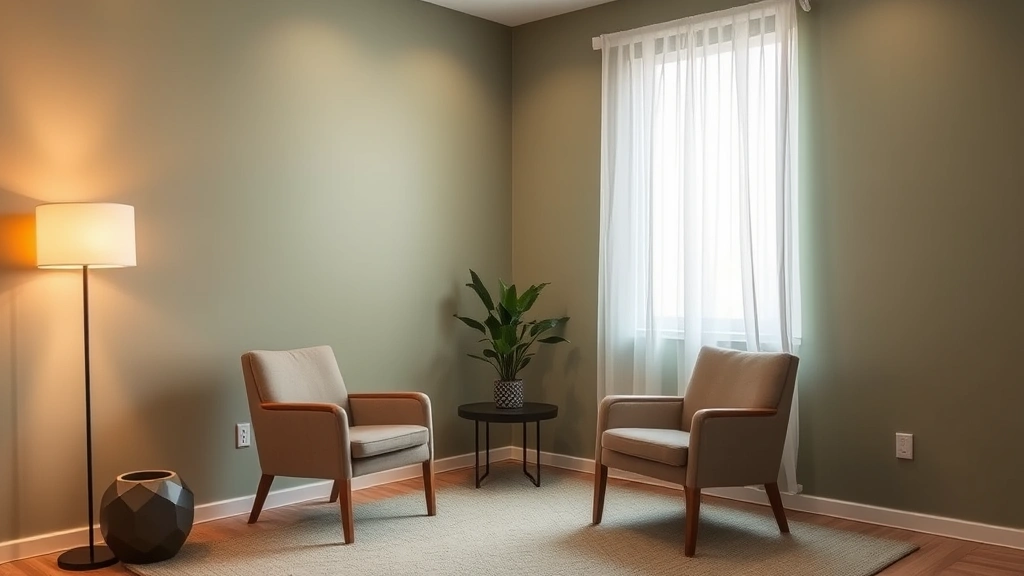
- Neutral, calming color palette: Soft greens, warm grays, and muted blues create psychological calm without overwhelming sensory systems
- Minimal visual clutter: Organized, intentional decoration reduces cognitive load and anxiety
- Adjustable lighting: Dimmer switches allow clients and therapists to control light intensity based on preference and session needs
The therapy room should feel distinct from clinical or institutional spaces. Unlike medical offices with harsh fluorescent lighting and sterile equipment, effective therapy rooms incorporate elements that promote natural healing responses through sensory optimization. This distinction is crucial because clients need to perceive the space as dedicated to their psychological wellbeing rather than medical treatment.
Furniture and Layout Considerations
The furniture selection and spatial arrangement in a therapy room profoundly influences the therapeutic relationship. Unlike traditional doctor-patient setups with a desk creating physical and psychological distance, effective therapy rooms position seating to facilitate genuine connection and equal power dynamics.
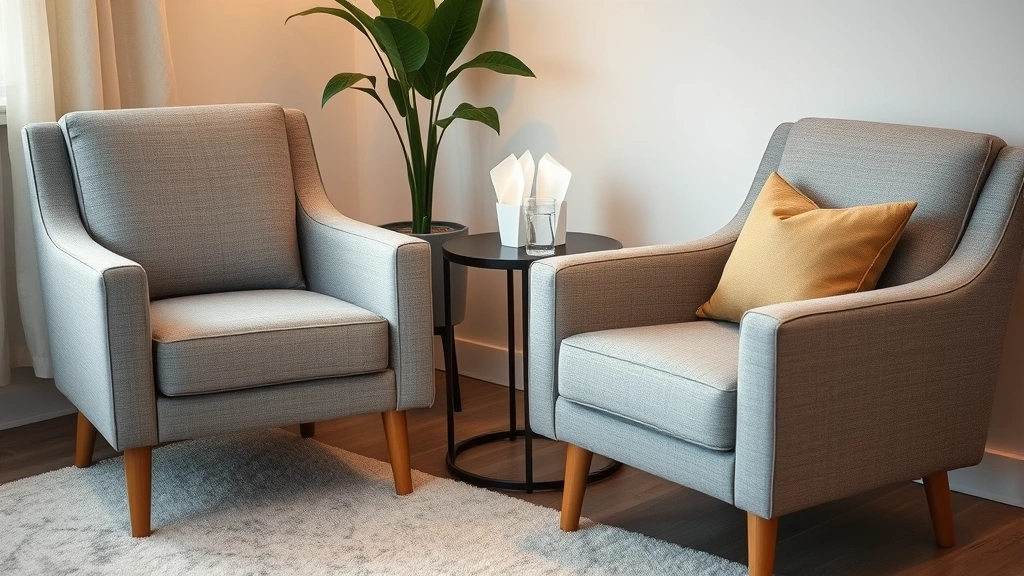
Seating arrangements should include two comfortable chairs positioned at a slight angle (approximately 90 degrees) rather than directly facing each other. This angle creates psychological comfort by avoiding the intensity of direct face-to-face positioning while maintaining adequate eye contact. Both chairs should be similar in height and comfort level, reinforcing the collaborative nature of therapy rather than a hierarchical relationship.
The furniture should include:
- Two or three comfortable, supportive chairs with proper lumbar support
- A small side table for tissues, water, or grounding objects
- Optional ottoman or footrest for clients who need additional comfort or grounding
- A secure storage system for confidential client records, out of view
- Minimal additional furniture that might distract or create visual clutter
Avoid placing furniture directly under windows or in ways that create visibility from hallways, which compromises privacy. The room should feel like a sanctuary where clients can relax their vigilance and focus on internal experience. Some therapists incorporate a small plant or water feature to provide gentle environmental stimulation without distraction, supporting the broader healing environment that supports various therapeutic modalities.
The therapist’s chair should not be positioned in a way that allows them to control the room’s exit more easily than the client. This seemingly small detail has significant psychological impact, ensuring clients never feel trapped or in a power imbalance situation.
Lighting and Color Psychology
Lighting represents one of the most underestimated yet powerful elements in therapy room design. Harsh fluorescent lighting triggers physiological stress responses, elevating heart rate and cortisol levels. In contrast, soft, warm lighting (2700K-3000K color temperature) activates parasympathetic nervous system responses associated with calm and safety.
The ideal therapy room incorporates layered lighting with multiple options:
- Overhead lighting with dimmer capability: Provides flexibility for different times of day and client preferences
- Task lighting: A soft lamp positioned to provide reading light without creating harsh shadows
- Natural light: Windows with blackout shades allow control while providing circadian rhythm support
- Accent lighting: Subtle uplighting or wall sconces create warm ambiance
Color psychology research demonstrates that specific colors support therapeutic goals. Soft greens activate relaxation responses and are associated with growth and healing. Warm grays provide neutrality without coldness. Muted blues support calm and trust. These colors should dominate walls while accent colors remain minimal. Avoid stark whites (which feel clinical), bright primary colors (which overstimulate), and dark colors (which feel heavy and depressing).
Interestingly, research from environmental psychology journals shows that clients in rooms with warmer color temperatures report greater feelings of safety and are more likely to disclose sensitive information. The therapy room’s color palette becomes a silent communicator of the therapist’s attunement to client comfort.
Acoustic Design and Sound Management
Sound management is critical for creating confidential, distraction-free therapy spaces. External noise—hallway conversations, traffic, construction—disrupts concentration and compromises confidentiality, undermining the sense of safety necessary for deep therapeutic work.
Acoustic treatment should include:
- Sound-absorbing materials in walls, ceilings, and floors to reduce echo and external noise transmission
- Weatherstripping on doors to prevent sound leakage
- White noise machines or soft background music to mask external sounds without distraction
- Heavy curtains that absorb sound while blocking light
- Carpeting or area rugs that reduce noise reflection
The ideal acoustic environment maintains complete confidentiality—clients should not worry that their conversations are audible to people in adjacent rooms. This privacy is both ethically essential and therapeutically crucial. When clients feel their confidentiality is protected, they relax their internal guard and engage more authentically in the therapeutic process.
Some therapists use subtle ambient sounds—gentle rainfall, forest ambiance, or instrumental music—to create a soothing auditory environment. However, these should remain very soft (below 50 decibels) to support focus rather than distract attention.
Creating Safe and Welcoming Spaces
Beyond physical design, the therapy room should communicate welcome and safety through intentional details. Accessible entry is essential—clients should be able to enter without navigating through clinical reception areas if possible, reducing the sense of being examined or judged before therapy even begins.
The room should include:
- Tissues and water: Readily available without clients needing to ask, communicating that emotional expression is expected and supported
- Minimal personal items: A few carefully chosen objects (artwork, plants) that reflect the therapist’s humanity without drawing focus
- Grounding objects: Optional fidget tools, stress balls, or textured items for clients with anxiety or trauma histories
- Clear boundaries: The room should feel distinct from the therapist’s personal office or other clinical spaces
- Cleanliness and organization: A well-maintained room communicates respect and professionalism
Consider how the room appears during initial consultations. Research on first impressions shows that clients form lasting judgments about safety and competence within seconds of entering. A therapy room that appears organized, intentional, and welcoming significantly increases the likelihood that clients will return and engage authentically.
For therapists working with diverse populations, the therapy room should reflect cultural sensitivity. This might include artwork representing various cultures, books or resources in multiple languages, and symbols of inclusivity. Some therapists incorporate elements that honor specific cultural healing traditions, demonstrating respect for clients’ backgrounds and worldviews. This is particularly important when supporting clients with diverse communication needs and cultural backgrounds.
Technology Integration in Modern Therapy Rooms
Contemporary therapy rooms increasingly incorporate technology thoughtfully to enhance rather than detract from the human connection. Telehealth capabilities have become essential, requiring adequate lighting for video sessions, reliable internet, and professional backgrounds.
Technology considerations include:
- Video conferencing setup: Professional lighting and camera positioning for telehealth sessions
- Recording capabilities: If used, cameras should be clearly visible and consent-based
- Minimal visible technology: Computers and equipment should be positioned to avoid distraction during in-person sessions
- Secure data systems: HIPAA-compliant record-keeping without visible screens showing client information
- White noise machines: Electronic devices that enhance privacy without drawing attention
Importantly, technology should enhance rather than replace human presence. Research on therapeutic effectiveness emphasizes that the quality of the therapist-client relationship remains the strongest predictor of positive outcomes. Technology should support this relationship by enabling sessions to occur conveniently and securely, not by intruding into the sacred space of human connection.
Some innovative therapy rooms incorporate biofeedback technology or apps that help clients monitor physiological responses to therapeutic interventions. However, these should be introduced intentionally and only when they serve client goals rather than clinical efficiency. The therapy room remains fundamentally a space for human healing, with technology playing a supportive rather than central role.
For therapists interested in expanding their practice, understanding how room design supports different modalities is essential. Career opportunities in therapeutic fields increasingly value professionals who understand environmental design, recognizing that the setting itself is a therapeutic tool.
FAQ
What is the ideal size for a therapy room?
The recommended minimum size is 120 square feet, providing adequate space for furniture arrangement, client movement, and psychological spaciousness. Smaller rooms can feel claustrophobic and compromise the sense of safety essential for therapeutic work.
How important is natural light in therapy rooms?
Natural light is very important for supporting circadian rhythms and providing a sense of connection to the outside world. However, it must be controllable through blinds or shades to maintain privacy and allow clients to adjust lighting based on preference and sensitivity.
Should therapy rooms have personal items on display?
Yes, but minimally and intentionally. A few carefully chosen items—artwork, plants, or meaningful objects—communicate the therapist’s humanity without becoming distracting. The focus should remain on the client’s experience rather than the therapist’s personal life.
What color is best for therapy rooms?
Soft greens, warm grays, and muted blues are most effective for supporting calm and trust. These colors activate relaxation responses and are associated with healing. Avoid stark whites, bright primary colors, and dark colors that may trigger anxiety or heaviness.
How can I improve acoustics in an existing therapy room?
Implement sound-absorbing materials including carpeting, heavy curtains, acoustic panels, and weatherstripping on doors. White noise machines can mask external sounds, and soft ambient music can create a soothing environment. Professional acoustic assessment can identify specific sound leakage points.
Is it necessary to have a desk in a therapy room?
No. Desks can create psychological distance and reinforce hierarchical power dynamics. Instead, position two comfortable chairs at a slight angle to facilitate connection while maintaining appropriate boundaries.
How does room design impact therapy outcomes?
Environmental design directly influences client comfort, trust, and engagement. Research demonstrates that well-designed therapy rooms reduce client anxiety by up to 30 percent and increase the likelihood of authentic disclosure and therapeutic progress. The environment becomes part of the therapeutic intervention itself.