PT’s Role in Healing Patellofemoral Syndrome: A Comprehensive Guide
Patellofemoral syndrome, commonly known as runner’s knee, affects millions of people worldwide and represents one of the most prevalent knee conditions treated in physical therapy clinics. This condition develops when pain occurs around the kneecap due to biomechanical imbalances, muscle weakness, or improper movement patterns. Rather than requiring invasive procedures, most cases respond exceptionally well to targeted physical therapy interventions that address root causes instead of merely masking symptoms.
The good news is that physical therapists possess specialized expertise in diagnosing and treating patellofemoral syndrome through evidence-based rehabilitation protocols. By understanding the mechanics of your knee, identifying specific dysfunctions, and implementing customized exercise programs, physical therapy offers a pathway to pain-free movement and lasting recovery. This comprehensive guide explores how physical therapy addresses patellofemoral syndrome and why it should be your first line of defense against knee pain.

Understanding Patellofemoral Syndrome
Patellofemoral syndrome represents a complex condition involving the relationship between the patella (kneecap) and femur (thighbone). Unlike acute injuries with clear traumatic events, patellofemoral pain typically develops gradually through repetitive stress, biomechanical dysfunction, or inadequate muscular support. The condition affects active individuals, sedentary populations, and everyone in between, making it a universal concern across demographics.
The patellofemoral joint operates as a sophisticated mechanical system where the kneecap glides through a groove in the femur during knee bending and straightening. When muscles become weak, tight, or imbalanced—particularly in the quadriceps, glutes, and hip stabilizers—the patella tracks abnormally through this groove. This misalignment increases pressure on cartilage surfaces, triggering inflammation and pain that worsens with activities like running, climbing stairs, or prolonged sitting.
Several factors contribute to patellofemoral syndrome development: weak hip abductors allow the knee to collapse inward, tight hip flexors alter knee mechanics, weak quadriceps provide inadequate support, and poor foot mechanics change force distribution through the entire kinetic chain. Understanding these contributing factors is essential because physical therapy addresses each component rather than treating symptoms in isolation.

Assessment and Diagnosis Process
Physical therapists begin with comprehensive evaluations that extend far beyond the knee itself. A thorough assessment includes detailed patient history, movement analysis, strength testing, flexibility evaluation, and functional movement screening. This holistic approach identifies all contributing factors, ensuring treatment targets root causes rather than symptoms alone.
During the initial evaluation, your physical therapist will assess your movement patterns during walking, squatting, and single-leg stance. They observe how your pelvis, hip, knee, and ankle interact during these movements. Specific tests evaluate quadriceps strength, hip abductor activation, hip external rotator function, and ankle mobility. Palpation helps identify tender areas and muscle tension patterns contributing to your symptoms.
Your therapist will also analyze your daily activities and exercise routines to identify aggravating factors. Do stairs cause pain? What about running or sitting with bent knees? Understanding your pain patterns helps establish baseline function and guides treatment planning. Many patients discover that pain isn’t purely mechanical but also influenced by activity level changes, training errors, or equipment modifications.
Modern physical therapy clinics may incorporate advanced assessment tools including video analysis, force plate measurements, or movement quality scoring systems. These objective measures establish clear baselines for progress tracking and help communicate improvements over time. The assessment process typically requires 60 minutes and forms the foundation for your individualized treatment plan.
Physical Therapy Interventions
Effective physical therapy for patellofemoral syndrome integrates multiple intervention strategies tailored to your specific impairments and functional limitations. Rather than following a generic protocol, your therapist customizes treatment based on assessment findings, ensuring every intervention addresses documented dysfunction.
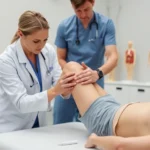
Manual therapy techniques often comprise the initial phase of treatment. Soft tissue mobilization addresses tight muscles in the quadriceps, hamstrings, calves, and hip musculature. Joint mobilization techniques improve patellar tracking and reduce stiffness. Myofascial release targets trigger points and restrictions limiting normal movement. These hands-on interventions reduce pain, improve mobility, and create an optimal environment for therapeutic exercise.
Modalities like therapeutic ultrasound, transcutaneous electrical nerve stimulation (TENS), and ice may provide temporary symptom relief, particularly during acute pain phases. However, research emphasizes that exercise-based interventions produce superior long-term outcomes compared to modalities alone. Your therapist balances symptom management with active rehabilitation to ensure sustained improvement.
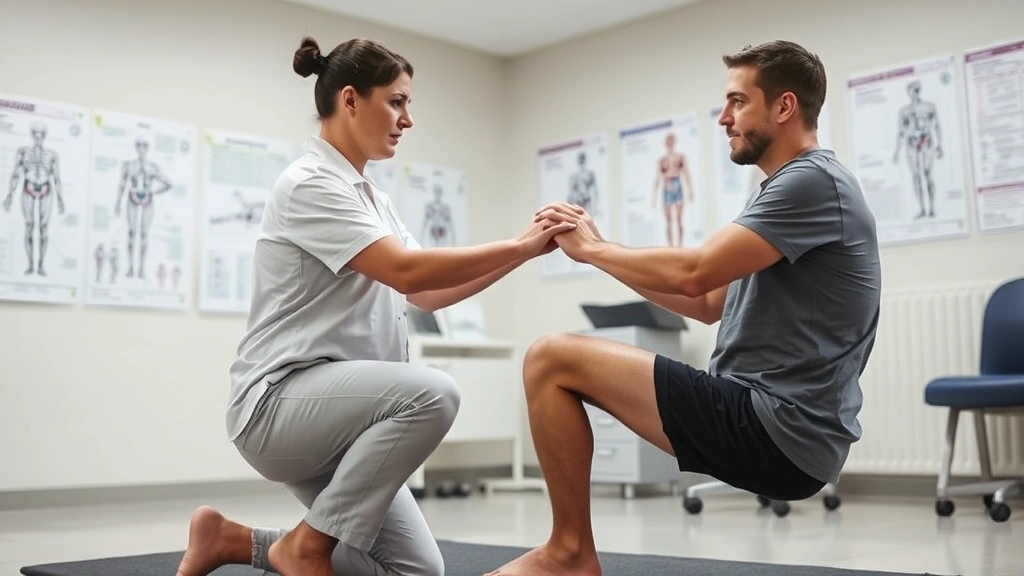
Movement pattern correction represents a cornerstone of patellofemoral syndrome treatment. Your therapist teaches proper biomechanics for daily activities and exercise. This might include cueing for proper knee alignment during squats, improving hip control during single-leg activities, or correcting running mechanics. These corrections prevent compensatory patterns that perpetuate dysfunction.
Neuromuscular re-education helps activate weak muscles, particularly the vastus medialis obliquus (VMO) and hip abductors. Simple exercises like quadriceps sets or clamshells initiate muscle activation before progressing to more challenging movements. Your therapist provides real-time feedback about muscle activation, helping your nervous system re-establish proper muscle recruitment patterns.
Strengthening and Conditioning Programs
Progressive strengthening forms the foundation of successful patellofemoral syndrome recovery. Research consistently demonstrates that physical therapy treatment emphasizing quadriceps and hip strengthening produces superior outcomes compared to other interventions. A well-designed program addresses multiple muscle groups across the kinetic chain.
Quadriceps strengthening receives primary emphasis because this muscle group provides crucial support for the patellofemoral joint. Exercises progress from isometric holds (quadriceps sets) to isotonic movements (leg extensions) to functional activities (squats and lunges). Your therapist carefully monitors movement quality, ensuring proper knee alignment and avoiding pain reproduction during exercises.
Hip strengthening exercises target the gluteus medius, gluteus maximus, and hip external rotators. These muscles control pelvic and hip position during single-leg activities, preventing dynamic knee valgus (inward knee collapse) that increases patellofemoral stress. Effective exercises include side-lying hip abduction, clamshells, monster walks, and single-leg deadlifts. Progressive loading increases challenge as strength improves.
Core stabilization exercises enhance overall body stability and reduce compensatory stress on the knee. Planks, dead bugs, bird dogs, and other core exercises improve the foundation for all lower extremity movements. A stable core prevents excessive lumbar spine motion, which would otherwise force compensatory movement through the hip and knee.
Ankle mobility work often receives overlooked importance in patellofemoral syndrome treatment. Limited ankle dorsiflexion forces compensatory motion at the knee, altering patellofemoral mechanics. Calf stretches, ankle mobilization, and proprioceptive ankle exercises restore normal ankle function and optimize force distribution throughout the entire lower extremity.
Your strengthening program progresses systematically from basic exercises to advanced movements mimicking your functional goals. If you’re a runner, your program includes sport-specific drills. If you enjoy hiking, your therapist incorporates downhill walking and uneven surface training. This functional progression ensures improvements transfer to real-world activities you enjoy.
Return to Activity Guidelines
Returning to activities that caused pain requires careful progression and strategic planning. Your physical therapist guides this process using pain-monitoring principles and activity modification strategies. The goal involves resuming desired activities while maintaining the strength and movement quality developed during rehabilitation.
Early-phase return to activity focuses on pain-free movement. If walking caused pain, your therapist teaches proper walking mechanics and gradually increases walking duration. If running caused symptoms, a walk-run progression gradually reintroduces running while monitoring pain response. This measured approach prevents re-injury and builds confidence in your recovering knee.
Activity modification strategies help you enjoy desired activities while protecting your healing knee. For runners, this might include reducing running volume, avoiding downhill running initially, or modifying running surfaces. For cyclists, adjusting seat height and position reduces patellofemoral stress. These temporary modifications allow continued participation while your knee strengthens.
Periodization principles guide your return to full activity. Rather than immediately returning to pre-injury volumes or intensities, a structured progression gradually increases demands. Your therapist might recommend two weeks of pain-free walking before introducing running, several weeks of running before returning to competition, or specific training modifications for continued improvement.
Communication with your therapist remains essential during return to activity phases. Pain flare-ups guide adjustments to your progression plan. Some patients progress faster than expected while others require extended timelines. Your therapist individualizes progression based on your response to activities, ensuring sustainable improvement.
Prevention and Long-Term Management
Once you’ve recovered from patellofemoral syndrome, maintaining the strength and movement quality you’ve developed prevents recurrence. A comprehensive maintenance program incorporates regular strengthening exercises, flexibility work, and activity-specific training.
Ongoing strength maintenance requires commitment even after symptoms resolve. Research indicates that patellofemoral pain frequently recurs when patients discontinue their strengthening program. Dedicating 20-30 minutes twice weekly to hip and quadriceps strengthening maintains the muscular support preventing symptom return. These exercises become part of your regular fitness routine rather than temporary rehabilitation.
Activity monitoring and progression prevents training errors that commonly trigger patellofemoral pain. Avoid sudden increases in activity volume, intensity, or frequency. Follow the 10% rule, increasing weekly training volume by no more than 10%. Gradually introduce new activities and listen to your body’s feedback about activity tolerance.
Equipment and environmental considerations affect long-term knee health. Runners benefit from appropriate footwear addressing their specific biomechanics. Cyclists should ensure proper bike fit and positioning. Cross-training reduces repetitive stress while maintaining fitness. Environmental factors like running surfaces, terrain, and weather influence patellofemoral stress and should guide activity planning.
Understanding your personal risk factors enables targeted prevention. If weak hip abductors contributed to your symptoms, maintaining hip strength becomes a priority. If tight hip flexors played a role, regular stretching prevents recurrence. If poor running mechanics caused problems, periodic gait analysis ensures you maintain proper form. This individualized prevention approach addresses your specific vulnerabilities.
Periodic check-ins with your physical therapist—even after recovery—provide valuable reassessment opportunities. Your therapist can identify early warning signs of recurrence, address emerging imbalances, and adjust your maintenance program based on changing activity levels or life circumstances. This proactive approach prevents minor issues from developing into significant problems.
For individuals seeking additional therapy cost guidance for ongoing management, understanding insurance coverage and treatment expenses helps with long-term planning. Many patients maintain periodic physical therapy appointments specifically for prevention and optimization even after acute symptoms resolve.
FAQ
How long does physical therapy for patellofemoral syndrome typically take?
Recovery timelines vary significantly based on symptom severity, chronicity, and individual factors. Mild cases may improve within 4-6 weeks with consistent therapy participation. Moderate cases often require 8-12 weeks for substantial improvement. Chronic cases may need 12-16 weeks or longer. Consistency matters more than duration—patients attending therapy regularly and completing home exercises progress faster than inconsistent participants. Your therapist provides realistic timelines based on your specific presentation.
Can physical therapy alone resolve patellofemoral syndrome without medication or injections?
Yes, research strongly supports physical therapy as first-line treatment for patellofemoral syndrome. Studies demonstrate that exercise-based interventions resolve symptoms in 70-80% of cases without medication or injections. Physical therapy addresses root causes rather than masking symptoms, producing sustainable improvements. Some patients benefit from temporary anti-inflammatory medication or corticosteroid injections to manage pain while beginning therapy, but these represent adjuncts to rather than replacements for physical therapy.
What exercises can I do at home between physical therapy sessions?
Your therapist prescribes specific home exercises addressing your individual impairments. Common exercises include quadriceps sets, straight leg raises, clamshells, side-lying hip abduction, glute bridges, and squats. Most programs require 20-30 minutes daily or 4-5 times weekly. Your therapist provides written instructions, videos, or demonstrations ensuring proper technique. Consistent home exercise participation accelerates recovery and produces superior outcomes compared to therapy sessions alone.
Can I continue running while undergoing physical therapy for patellofemoral syndrome?
This depends on your pain levels and symptom severity. Many patients can continue modified running during therapy using walk-run progressions and reduced volume. Others require temporary running cessation until strength improves. Your therapist guides this decision based on your pain response and functional limitations. The goal involves finding the right balance between activity modification and progressive challenge that promotes healing without re-injury.
What should I do if my patellofemoral pain returns after completing physical therapy?
Contact your physical therapist immediately if pain recurs. Early intervention prevents progression to chronic pain and avoids deconditioning. Your therapist reassesses your strength and movement patterns, identifies factors contributing to recurrence, and adjusts your maintenance program. Often, returning to more rigorous strengthening exercises or modifying activities temporarily resolves recurrent pain quickly. This emphasizes the importance of maintaining your strength program long-term.
Are there specific activities I should avoid with patellofemoral syndrome?
Activities causing pain should be modified or temporarily avoided during acute phases. Common aggravating activities include excessive stair climbing, prolonged sitting with bent knees, deep squatting, and high-impact running. However, complete rest isn’t recommended. Instead, modify activities to pain-free levels and gradually progress. Your therapist guides activity selection based on your specific pain patterns and functional goals.