How Does Art Therapy Heal? Expert Insights
Art therapy represents a powerful intersection of creative expression and psychological healing, offering individuals a unique pathway to emotional processing and mental wellness. Unlike traditional talk therapy, art therapy leverages the therapeutic potential of creative processes—painting, drawing, sculpting, and other artistic mediums—to facilitate emotional release, self-discovery, and behavioral change. This evidence-based approach has gained significant recognition within clinical psychology and mental health communities, with research demonstrating measurable improvements in anxiety, depression, trauma recovery, and overall psychological resilience.
The fundamental principle underlying art therapy rests on a simple yet profound truth: the creative process itself holds healing power. When individuals engage in artistic expression, they bypass the analytical mind’s filters and access deeper emotional truths that words alone cannot capture. This makes art therapy particularly effective for individuals struggling to articulate their feelings, processing complex trauma, or navigating mental health challenges that resist conventional therapeutic interventions. Whether used as a standalone treatment or integrated with other therapeutic modalities, art therapy continues to demonstrate remarkable efficacy across diverse populations and clinical settings.

The Neuroscience Behind Artistic Healing
Contemporary neuroscience research has illuminated the biological mechanisms through which art therapy produces therapeutic effects. When individuals engage in creative activities, multiple brain regions activate simultaneously—including the prefrontal cortex responsible for executive function, the limbic system governing emotional processing, and the default mode network associated with self-reflection. This synchronized neural activation creates optimal conditions for psychological integration and emotional regulation.
Studies utilizing functional magnetic resonance imaging (fMRI) have demonstrated that artistic engagement reduces activity in the amygdala, the brain’s threat-detection center, while simultaneously increasing activation in regions associated with emotional processing and self-awareness. Frontiers in Psychology has published extensive research documenting how creative expression modulates stress hormone levels, particularly cortisol, resulting in measurable physiological relaxation responses. This neurobiological shift explains why individuals often report feeling calmer, more centered, and emotionally balanced following art therapy sessions.
The reward system also plays a crucial role in art therapy’s healing mechanisms. Creating art stimulates dopamine release—the neurotransmitter associated with motivation, pleasure, and positive reinforcement. This neurochemical cascade not only makes the creative process inherently satisfying but also reinforces engagement with therapeutic activities, increasing treatment adherence and therapeutic outcomes. Additionally, the sensorimotor engagement required in artistic creation activates proprioceptive and kinesthetic processing pathways, facilitating occupational therapy principles that promote mind-body integration.
How Art Therapy Addresses Emotional Processing
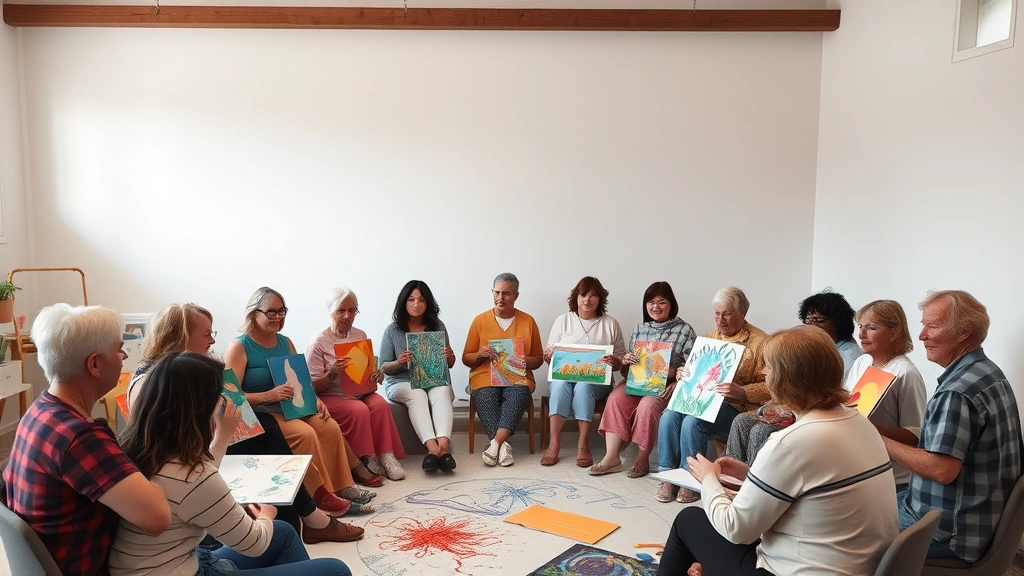
One of art therapy’s most significant strengths lies in its capacity to facilitate emotional processing in ways that transcend linguistic limitations. Many individuals experience difficulty articulating complex emotional states through verbal communication alone. Art provides an alternative language—a non-verbal medium through which emotions can be externalized, examined, and ultimately transformed. This process proves particularly valuable for individuals with alexithymia (difficulty identifying and describing emotions) or those whose trauma histories have created barriers to verbal expression.
The externalization process inherent in creating art creates psychological distance between the individual and their emotional experience. By translating internal emotional states into external visual representations, individuals gain observational perspective on their feelings. This metacognitive awareness—the ability to think about one’s own thinking and feeling processes—represents a cornerstone of psychological healing. Art therapists guide clients through systematic examination of their creations, facilitating insights about emotional patterns, triggers, and underlying psychological themes.
Color psychology, symbolism, and artistic composition all contribute to emotional processing within art therapy contexts. The colors individuals select often reflect their emotional states and unconscious associations. Similarly, the spatial arrangement of elements within artwork frequently mirrors psychological organization patterns and relational dynamics. Through guided exploration of these artistic choices, individuals develop enhanced self-awareness and emotional literacy. This integration of therapeutic communication techniques with creative expression creates powerful conditions for emotional insight and psychological growth.
Research published in the Art Therapy Journal demonstrates significant reductions in emotional dysregulation following art therapy interventions. Participants report improved mood stability, enhanced emotional awareness, and greater capacity to manage difficult feelings. These outcomes suggest that art therapy activates inherent emotional regulation mechanisms, enabling individuals to develop sustainable psychological coping strategies.
Art Therapy for Trauma and PTSD Recovery
Trauma fundamentally disrupts normal emotional processing, often leaving individuals with fragmented memories, intrusive imagery, and dysregulated nervous system responses. Traditional talk therapy approaches sometimes inadvertently retraumatize individuals by requiring detailed verbal recounting of traumatic events. Art therapy offers a gentler pathway to trauma integration, allowing individuals to process traumatic material at their own pace through creative expression rather than narrative recounting.
The non-directive nature of art therapy proves particularly valuable in trauma treatment. Rather than requiring clients to discuss specific traumatic events, art therapists invite creative expression without predetermined content or outcomes. This approach respects trauma survivors’ autonomy and reduces the risk of retraumatization. Individuals can gradually externalize traumatic experiences through symbolic representation, allowing unconscious material to surface safely within the therapeutic container.
Neuroscientific research on trauma indicates that traumatic memories often become encoded in the right brain hemisphere, which processes visual, emotional, and sensory information but lacks verbal language capacity. Art therapy directly engages right-hemisphere processing, enabling access to traumatic material that verbal therapy alone might not reach. By creating visual representations of traumatic experiences, individuals facilitate bilateral brain hemisphere communication and promote neural integration of fragmented traumatic memories.
Complex PTSD (C-PTSD) resulting from prolonged or repeated trauma often involves profound disruptions in self-identity and relational capacity. Art therapy’s focus on creative self-expression supports identity reconstruction and relational healing. As trauma survivors engage in artistic creation, they often experience renewed sense of agency, competence, and self-determination—psychological capacities frequently damaged by traumatic experiences. This rebuilding of psychological resources represents essential work in comprehensive trauma recovery.
Creative Expression in Mental Health Treatment
The integration of creative expression within broader mental health treatment frameworks has revolutionized therapeutic possibilities. Art therapy complements and enhances outcomes across diverse psychiatric conditions including depression, anxiety disorders, bipolar disorder, and schizophrenia spectrum conditions. The creative process itself provides structure, purposefulness, and achievement experiences that counteract depressive symptoms and anhedonia (inability to experience pleasure).
For individuals experiencing anxiety disorders, art therapy offers grounding and present-moment awareness cultivation. The focused attention required in artistic creation naturally redirects anxious thoughts away from future-oriented worry patterns. This mindfulness-like state reduces physiological anxiety symptoms and promotes parasympathetic nervous system activation. Additionally, the concrete, achievable nature of creative projects provides mastery experiences that build self-efficacy and confidence—psychological resources depleted by anxiety disorders.
The relationship between therapeutic effectiveness and creative modalities has become increasingly recognized within evidence-based practice frameworks. Mental health professionals now regularly incorporate art therapy alongside pharmacological interventions and psychotherapy as comprehensive treatment approaches. This integrative model acknowledges that different therapeutic modalities activate distinct neural pathways and psychological mechanisms, with combined approaches producing synergistic healing effects.
Creative expression also facilitates cognitive restructuring—the process of identifying and challenging maladaptive thought patterns. As individuals externalize thoughts through artistic representation, they naturally gain perspective on cognitive distortions. Art therapists guide collaborative examination of these representations, supporting clients in developing more adaptive thinking patterns. This integration of cognitive-behavioral principles with creative expression demonstrates how traditional psychological interventions can be enhanced through artistic engagement.
Art Therapy Applications Across Different Populations
Art therapy’s versatility extends across the entire lifespan and across diverse clinical populations. In pediatric settings, art therapy serves as a developmentally appropriate intervention for children who lack the verbal sophistication to articulate complex emotional experiences. Children naturally gravitate toward creative expression, making art therapy a culturally congruent and engaging treatment modality. Research demonstrates that therapeutic approaches for children that incorporate creative expression produce superior outcomes compared to verbal-only interventions.
Adolescents benefit significantly from art therapy’s non-judgmental creative space, particularly during developmental periods characterized by identity exploration and emotional volatility. The creative process provides healthy outlets for intense emotions while supporting developmental tasks of self-discovery and autonomy. Art therapy in school settings has demonstrated effectiveness in reducing behavioral problems, improving academic engagement, and supporting social-emotional learning.
Geriatric populations increasingly access art therapy for cognitive stimulation, emotional expression, and social engagement. Creative engagement in older adulthood supports cognitive reserve, delays cognitive decline, and provides meaningful purposefulness. Art therapy in dementia care environments facilitates emotional communication when verbal capacity declines, enabling continued relational connection and dignity preservation.
Art therapy also serves specialized populations including individuals with autism spectrum disorder, intellectual disabilities, and communication disorders. The non-verbal nature of artistic expression provides alternative communication pathways for individuals whose verbal communication abilities are limited. This accessibility makes art therapy an essential component of inclusive mental health and rehabilitation services.
Individuals navigating chronic medical illness, pain management, and end-of-life care benefit from art therapy’s capacity to facilitate meaning-making and emotional processing. Creative expression enables patients to externalize fears, process loss, and maintain sense of agency within medical contexts that often emphasize powerlessness. Integrative health approaches increasingly recognize art therapy as essential to comprehensive patient care.
Integrating Art Therapy with Other Therapeutic Approaches
Contemporary best practices in mental health treatment emphasize integrative, multimodal approaches that leverage multiple therapeutic modalities. Art therapy integrates seamlessly with psychodynamic therapy, cognitive-behavioral therapy, dialectical behavior therapy, and humanistic approaches. This integration amplifies therapeutic effectiveness by engaging diverse psychological mechanisms and learning pathways.
When combined with psychodynamic exploration, art therapy facilitates unconscious material surfacing and symbolic interpretation. The creative process activates primary process thinking—the unconscious, imaginal, and symbolic mental operations that psychodynamic theory emphasizes. Art therapists trained in psychodynamic principles guide symbolic interpretation, supporting clients in understanding how unconscious conflicts and desires manifest in their artistic creations.
Cognitive-behavioral art therapy applications integrate cognitive restructuring with creative expression. Clients develop visual representations of problematic thought patterns, behavioral chains, and emotional responses. These visual cognitive maps facilitate understanding of psychological processes and support development of adaptive alternatives. The concrete, visual nature of artistic representation often makes abstract cognitive concepts more accessible and memorable.
Dialectical behavior therapy (DBT) increasingly incorporates art therapy to enhance emotional regulation skill development. Creative expression provides experiential practice in distress tolerance and emotion regulation. Additionally, art therapy supports mindfulness cultivation—a core DBT principle. The focused present-moment awareness required in artistic creation naturally develops mindfulness capacities that generalize to other life domains.
Trauma-informed art therapy integrates trauma-specific treatment principles including safety, trustworthiness, collaboration, and empowerment with creative expression. This approach ensures that art therapy serves trauma recovery without inadvertently retraumatizing clients. The comprehensive therapy resources available increasingly emphasize trauma-informed principles across all therapeutic modalities.
Research from the American Art Therapy Association continues documenting optimal integration strategies and treatment outcome data. Evidence consistently demonstrates that multimodal approaches incorporating art therapy produce superior outcomes compared to single-modality treatments across diverse clinical presentations and populations.
FAQ
What credentials should art therapists possess?
Professional art therapists should hold credentials from recognized credentialing bodies such as the Art Therapy Credentials Board (ATCB). Minimum requirements typically include a master’s degree in art therapy from an accredited program, supervised clinical experience, and successful completion of national certification examinations. These rigorous standards ensure practitioners possess both clinical training and artistic expertise necessary for effective therapeutic practice.
How does art therapy differ from art classes or recreational art?
While recreational art emphasizes artistic skill development and aesthetic product creation, art therapy prioritizes the therapeutic process over artistic quality. Art therapists focus on emotional exploration, psychological insight, and behavioral change rather than producing aesthetically pleasing artwork. The therapeutic relationship and clinical assessment distinguish art therapy from recreational or educational art experiences.
Is artistic ability required for art therapy participation?
Absolutely not. Art therapy welcomes individuals regardless of artistic skill or experience. Many individuals fear that lack of artistic talent will limit their therapeutic benefit, but research demonstrates that artistic skill bears no relationship to therapeutic outcome. Art therapy embraces all forms of creative expression—from abstract mark-making to representational imagery—valuing the process of creation rather than product quality.
How long does art therapy treatment typically last?
Treatment duration varies considerably based on individual needs, clinical presentation, and treatment goals. Some individuals benefit from brief art therapy interventions lasting 6-8 sessions, while others engage in longer-term treatment spanning months or years. Art therapists collaboratively establish treatment plans with clients, regularly assessing progress and adjusting approaches as needed.
Can art therapy address serious mental health conditions like schizophrenia?
Yes. Art therapy serves as valuable adjunctive treatment for serious mental illness including schizophrenia spectrum disorders. Creative expression can facilitate emotional regulation, reduce negative symptoms, and support social engagement. However, art therapy typically complements rather than replaces pharmacological and psychotherapeutic interventions for serious mental illness.
What populations benefit most from art therapy?
Research indicates that art therapy benefits individuals across all ages and diagnostic categories. Particularly strong evidence supports art therapy effectiveness for trauma survivors, individuals with anxiety and depression, children and adolescents, and individuals with communication difficulties. However, the therapeutic benefits extend across diverse populations and clinical presentations.