How Can Mindfulness Aid Kids? Expert Insights on Child Development and Well-Being
Mindfulness has emerged as a transformative practice for children’s mental health and emotional development. In today’s fast-paced world, where kids face unprecedented levels of stress, anxiety, and digital overstimulation, mindfulness offers evidence-based techniques to help young minds develop resilience, focus, and emotional regulation. Whether you’re a parent, educator, or healthcare provider in Carolina pediatric therapy settings, understanding how mindfulness can benefit children is essential for supporting their holistic development.
Research from leading institutions demonstrates that mindfulness practices can significantly improve children’s attention span, reduce behavioral problems, and enhance overall psychological well-being. This comprehensive guide explores expert insights on mindfulness for kids, drawing from neuroscience, psychology, and practical applications used by professionals working in pediatric therapy environments.
What Is Mindfulness and How Does It Work for Children?
Mindfulness is the practice of bringing non-judgmental awareness to the present moment. For children, this means learning to notice their thoughts, feelings, and bodily sensations without criticism or attempts to change them. Unlike meditation practices that may require extended sitting periods, mindfulness for kids encompasses various accessible techniques that fit naturally into their daily routines.
According to the American Psychological Association, mindfulness helps children develop metacognitive skills—the ability to observe their own thinking processes. This self-awareness is foundational for emotional intelligence and healthy coping mechanisms. When children practice mindfulness, they learn to create space between stimulus and response, giving themselves the opportunity to choose their reactions rather than act impulsively.
The mechanics of mindfulness work through neuroplasticity, the brain’s ability to form new neural pathways. When children consistently practice mindfulness, they strengthen connections in the prefrontal cortex, which governs decision-making, impulse control, and emotional regulation. This is particularly valuable for kids experiencing challenges that benefit from physical therapy treatment for cerebral palsy or other developmental concerns, as mindfulness complements other therapeutic interventions.
Mindfulness is not about achieving a blank mind or perfect calm. Instead, it teaches children to observe their internal experiences with curiosity and acceptance. This fundamental shift in perspective helps them develop resilience and reduces the shame or frustration that often accompanies difficult emotions.

Brain Development and Mindfulness Benefits
The developing brain undergoes significant changes throughout childhood and adolescence. Mindfulness interventions capitalize on this neuroplasticity, offering windows of opportunity for establishing healthy neural patterns. Research published in Nature Neuroscience shows that regular mindfulness practice increases gray matter density in brain regions associated with learning, memory, and emotional regulation.
Children’s brains are particularly responsive to mindfulness training because their neural networks are still forming. When young people engage in consistent mindfulness practice, they develop stronger connections in the anterior cingulate cortex, which is crucial for attention control and error detection. This enhanced neural connectivity translates to improved focus, better emotional responses, and increased self-awareness.
Mindfulness also influences the amygdala, the brain’s alarm system responsible for processing fear and emotional responses. In children who practice mindfulness regularly, the amygdala shows reduced reactivity to stressors. This means they’re less likely to experience an exaggerated fight-or-flight response to everyday challenges. Simultaneously, mindfulness strengthens the connection between the amygdala and prefrontal cortex, enabling better emotional regulation.
The hippocampus, essential for memory formation and learning, also benefits from mindfulness practice. Studies indicate that children with consistent mindfulness training demonstrate improved working memory and information retention. This is why many educators and MindLift Daily Blog resources emphasize incorporating mindfulness into educational settings.
Additionally, mindfulness practice influences the default mode network, the brain’s “task-negative” system active during mind-wandering and self-referential thinking. Reducing excessive default mode activity helps children maintain focus and reduces rumination, a key factor in anxiety and depression.
Mindfulness Techniques for Different Age Groups
Effective mindfulness practice requires age-appropriate techniques that match children’s developmental capabilities and interests. Younger children respond best to concrete, engaging practices, while adolescents can explore more sophisticated mindfulness concepts.
Early Childhood (Ages 3-6): Young children benefit from sensory-focused mindfulness activities. Breathing exercises using visual cues, such as watching a feather float down or imagining blowing bubbles, help them regulate their nervous systems. Body scan practices adapted for short attention spans—perhaps focusing on individual body parts for just 30 seconds—introduce the concept of physical awareness. Mindful movement, including yoga poses designed for kids, combines physical activity with present-moment awareness.
Middle Childhood (Ages 7-11): Children in this age group can engage in longer mindfulness sessions, typically 5-10 minutes. They respond well to guided meditations that incorporate storytelling or imagination. Progressive muscle relaxation, where children tense and release different muscle groups, builds body awareness and emotional understanding. Mindful listening exercises, where kids focus on environmental sounds or music without judgment, develop attention skills and auditory processing.
Adolescents (Ages 12+): Teenagers can explore more complex mindfulness practices, including traditional meditation, body scans lasting 15-20 minutes, and mindfulness of thoughts and emotions. Adolescents also benefit from understanding the neuroscience behind mindfulness, which increases their engagement and motivation. Mindful technology use and digital wellness practices address challenges specific to this age group.
Professionals working in speech therapy near me settings often incorporate mindfulness into their therapeutic approaches, recognizing that present-moment awareness enhances communication skills and emotional expression.
Emotional Regulation and Stress Reduction
One of mindfulness’s most significant benefits for children is its impact on emotional regulation. Children with underdeveloped emotion-regulation skills often experience overwhelming feelings that lead to behavioral challenges, anxiety, and depression. Mindfulness teaches them to observe emotions without being controlled by them.
When children practice mindfulness, they learn to recognize the early signs of emotional escalation. This early recognition creates opportunities for intervention before emotions become overwhelming. A child might notice tightness in their chest or tension in their shoulders before a full anxiety or anger response, allowing them to implement calming techniques proactively.
The stress-reduction benefits of mindfulness are well-documented. Research in JAMA Psychiatry demonstrates that mindfulness-based interventions reduce cortisol levels, the primary stress hormone. For children experiencing chronic stress—whether from academic pressure, family issues, or health concerns—this physiological benefit is transformative.
Mindfulness also reduces the rumination cycle common in anxious children. Rather than getting caught in repetitive worry thoughts, mindful children learn to observe these thoughts as mental events that don’t require action or belief. This cognitive shift significantly reduces anxiety symptoms and prevents the development of anxiety disorders.
Children dealing with trauma or significant life changes benefit particularly from mindfulness practices that emphasize safety and present-moment grounding. Techniques like the 5-4-3-2-1 sensory grounding method—identifying five things they see, four they can touch, three they hear, two they smell, and one they taste—anchor children in the present moment and away from trauma-related thoughts.
Academic Performance and Focus Enhancement
Mindfulness directly impacts academic performance by enhancing attention, working memory, and cognitive flexibility. Children who practice mindfulness show measurable improvements in standardized test scores, particularly in reading comprehension and mathematics. The mechanism is straightforward: a focused mind learns more effectively than a distracted one.
Attention is a limited resource, especially for children whose brains are still developing executive function capabilities. Mindfulness strengthens the neural circuits responsible for sustained attention, helping children maintain focus on academic tasks despite distractions. This is particularly valuable in today’s environment, where digital distractions compete constantly for children’s attention.
Working memory, the ability to hold and manipulate information temporarily, is essential for problem-solving and learning. Studies show that children engaging in regular mindfulness practice demonstrate improved working memory capacity. This translates to better performance in complex academic tasks requiring multiple cognitive steps.
Mindfulness also cultivates what psychologists call “psychological flexibility”—the ability to adapt thinking strategies when initial approaches aren’t working. This flexibility is crucial for mathematical problem-solving and creative thinking. Children with strong psychological flexibility approach challenges with curiosity rather than frustration.
Teachers and educators increasingly recognize mindfulness’s academic benefits. Many schools implement brief mindfulness practices at the beginning of the day or before testing to enhance student focus and performance. These practices needn’t be lengthy; even five minutes of focused breathing can significantly improve subsequent academic performance.
Social Skills and Empathy Development
Mindfulness strengthens the neural circuits underlying empathy and social connection. When children practice mindfulness, they develop enhanced ability to recognize and understand others’ emotional states, a fundamental component of social intelligence.
The practice of mindfulness cultivates what researchers call “social awareness.” Children who practice mindfulness become more attuned to nonverbal communication cues—facial expressions, body language, and tone of voice. This heightened awareness enables them to respond more appropriately in social situations and develop deeper friendships.
Loving-kindness meditation, a specific mindfulness practice, directly enhances compassion and empathy. In this practice, children mentally send wishes of well-being to themselves, loved ones, neutral people, and even those they find difficult. Research demonstrates that loving-kindness practice increases prosocial behavior and reduces bullying and aggression in school settings.
Mindfulness also reduces the self-centered perspective that characterizes childhood development. By learning to observe their own thoughts and emotions without judgment, children develop the capacity to recognize that others have inner lives equally complex and valid as their own. This perspective shift is foundational for developing genuine empathy.
Children who practice mindfulness show reduced aggression and increased conflict-resolution skills. They’re more likely to pause before reacting aggressively and more capable of considering others’ perspectives during disagreements. These social skills are essential for healthy relationships throughout life.
Professionals working in occupational therapy jobs often incorporate mindfulness to enhance children’s social and emotional functioning alongside skill development.
Implementing Mindfulness in School and Home Settings
Successful mindfulness implementation requires consistency, age-appropriate practices, and integration into existing routines. Both schools and homes can effectively cultivate mindfulness cultures that support children’s well-being.
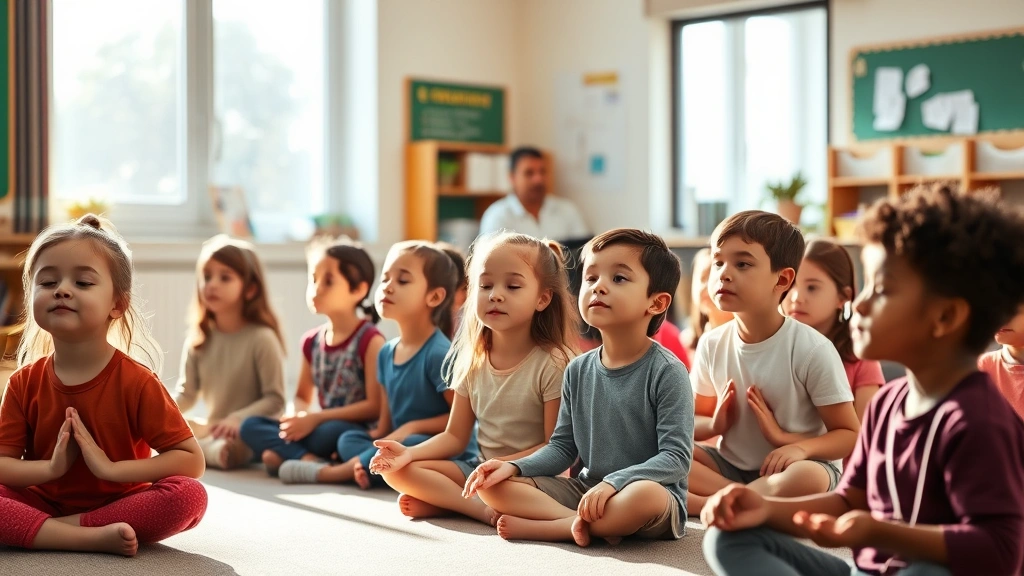
School Implementation: Forward-thinking schools incorporate mindfulness into their daily schedules. Morning mindfulness practices help students transition into learning mode with focused attention. Mid-day practices combat stress and improve afternoon engagement. Pre-test mindfulness sessions enhance academic performance. Some schools dedicate entire periods to mindfulness education, teaching students techniques they can use independently.
Classroom teachers can integrate brief mindfulness moments throughout the day—mindful transitions between subjects, mindful listening during class discussions, and mindful walking in hallways. These practices don’t require extensive training or special equipment; they simply require intentionality about bringing present-moment awareness to existing activities.
Home Implementation: Parents can establish mindfulness practices that fit their family’s lifestyle. Mindful mealtimes, where family members eat without screens and focus on sensory experiences, build connection and presence. Bedtime mindfulness routines help children transition to sleep with calmer nervous systems. Family breathing exercises or guided meditations create shared experiences that strengthen family bonds.
Parents practicing mindfulness themselves model its benefits for their children. Children are more likely to engage in practices they see their parents valuing through personal participation. Additionally, parents who practice mindfulness become more emotionally attuned to their children, responding with greater patience and presence.
Consistency matters more than duration. Daily five-minute practices produce more significant benefits than occasional longer sessions. Children respond better when mindfulness is normalized as a regular part of their routine rather than treated as a special intervention or punishment.
Resources like the MindLift Daily Blog provide practical guidance for parents and educators seeking to implement mindfulness effectively. Additionally, therapy for breakups and other therapeutic resources recognize the broader role mindfulness plays in emotional wellness across life circumstances.
Integration with Other Therapeutic Approaches
Mindfulness works synergistically with other therapeutic and educational approaches, enhancing their effectiveness. Mental health professionals increasingly recognize mindfulness as a complementary practice that strengthens other interventions.
Cognitive-Behavioral Therapy (CBT) Integration: Mindfulness enhances CBT by helping children observe their thought patterns without judgment before working to change them. This observational stance makes cognitive restructuring more effective and reduces resistance to therapy.
Physical and Occupational Therapy: Children receiving physical therapy treatment for cerebral palsy or other physical interventions benefit from mindfulness practices that increase body awareness and reduce anxiety about therapeutic exercises. Mindfulness helps children notice physical progress and develop patience with gradual improvement.
Speech and Language Therapy: Mindfulness complements speech therapy near me by reducing anxiety around communication, enhancing listening skills, and promoting present-moment awareness during speech practice. Children who practice mindfulness approach speech therapy with greater calm and openness.
Behavioral Interventions: Mindfulness reduces the need for external behavioral management by strengthening internal self-regulation. Children with strong mindfulness skills respond better to behavioral approaches because they’re developing intrinsic motivation for behavior change rather than relying solely on external rewards or consequences.
Holistic Wellness Approaches: Red light therapy near me and other wellness interventions work alongside mindfulness to support comprehensive child health. Mindfulness enhances the effectiveness of any wellness practice by promoting consistent engagement and present-moment awareness.
Professional training in mindfulness-based interventions enables therapists and educators to customize practices for individual children’s needs and therapeutic goals. This personalized approach maximizes benefits and ensures cultural and developmental appropriateness.
FAQ
At what age can children start practicing mindfulness?
Children as young as three years old can begin simple mindfulness practices. Early practices focus on sensory awareness and brief breathing exercises. As children develop cognitively, mindfulness practices can become more sophisticated and longer in duration. Even very young children benefit from the calming effects of mindful movement and sensory focus.
How long should children practice mindfulness daily?
Duration depends on age. Young children benefit from 2-5 minute sessions, while school-age children can engage in 5-10 minute practices, and adolescents can sustain 15-20 minute sessions. Consistency matters more than duration; daily shorter practices produce better results than occasional longer sessions.
Can mindfulness replace professional mental health treatment?
Mindfulness is a valuable complement to professional treatment but shouldn’t replace it for children with significant mental health concerns. Children experiencing severe anxiety, depression, or trauma benefit from mindfulness as part of comprehensive treatment that may include therapy, medication, or other interventions.
What if my child resists mindfulness practice?
Resistance is normal. Start with very short sessions, make practices playful and engaging, and model mindfulness yourself. Allow children to choose which practices appeal to them. Frame mindfulness as a skill they’re learning rather than something they should already do perfectly.
How do I know if mindfulness is working for my child?
Look for gradual changes in emotional regulation, focus, and behavior. Children may show improved academic performance, reduced anxiety symptoms, better sleep, and enhanced ability to manage frustration. Changes often occur gradually over weeks or months rather than immediately.
Can mindfulness help with specific conditions like ADHD?
Research shows mindfulness helps children with ADHD improve attention and impulse control. While mindfulness shouldn’t replace evidence-based ADHD treatments, it complements medication and behavioral interventions effectively. Some children with ADHD find certain mindfulness practices more accessible than others; working with professionals to find suitable practices is helpful.