

Life has a way of presenting us with challenges that can feel overwhelming, leaving us searching for meaningful ways to process our experiences and find healing. The concept of a therapy tree offers a powerful metaphor and practical tool for understanding how we can grow through life’s difficulties, much like a tree that becomes stronger after weathering storms.
A therapy tree represents more than just a symbolic representation of growth—it embodies the idea that healing happens through connection, grounding, and the natural process of reaching toward light while staying rooted in supportive soil. This therapeutic concept has gained recognition among mental health professionals and individuals seeking holistic approaches to emotional wellness, offering a tangible way to visualize and work through personal challenges.
Whether you’re dealing with trauma, relationship difficulties, anxiety, or simply seeking personal growth, understanding how to cultivate your own therapy tree can provide a framework for healing that honors both your struggles and your inherent capacity for resilience.
Understanding the Therapy Tree Concept
The therapy tree is a therapeutic metaphor that uses the natural growth patterns and characteristics of trees to help individuals understand their healing journey. This approach recognizes that, like trees, humans are complex organisms that require proper nourishment, supportive environments, and time to develop resilience and strength.
Mental health professionals have embraced this concept because it provides clients with a concrete, visual framework for understanding their emotional and psychological development. The American Psychological Association recognizes the power of metaphorical thinking in therapy, noting how symbolic representations can help clients process complex emotions and experiences more effectively.
The therapy tree concept integrates seamlessly with various therapeutic approaches, from cognitive-behavioral therapy to nature-based interventions. It acknowledges that healing is not linear but rather organic, involving periods of growth, dormancy, and renewal. This understanding can be particularly valuable for those exploring different therapeutic options, including considerations about therapy costs and finding the right approach for their needs.
Unlike traditional talk therapy alone, the therapy tree model encourages clients to think holistically about their well-being, considering physical, emotional, spiritual, and social aspects of their lives. This comprehensive approach aligns with current research showing that healing happens most effectively when we address the whole person rather than isolated symptoms.

The Roots: Building a Strong Foundation
The roots of your therapy tree represent the foundational elements that support your mental health and overall well-being. These invisible but crucial components include your core values, early relationships, cultural background, and the basic skills you’ve developed for managing life’s challenges.
Strong therapeutic roots develop through consistent self-care practices, healthy relationships, and the cultivation of inner resources like self-compassion and mindfulness. Just as tree roots spread wide and deep to gather nutrients and provide stability, your emotional roots need diverse sources of nourishment to support your growth.
Building robust roots often involves examining and healing early experiences that may have created instability in your foundation. This might include working through childhood trauma, developing secure attachment patterns, or addressing limiting beliefs that have constrained your growth. Many therapeutic approaches focus on strengthening these foundational elements, including specialized interventions like pediatric therapy for children developing these crucial early roots.
The root system also encompasses your support network—family, friends, mentors, and professional helpers who provide emotional nutrients for your growth. Research from the National Institute of Mental Health consistently shows that strong social connections are among the most powerful predictors of mental health resilience.
The Trunk: Developing Inner Stability
The trunk of your therapy tree represents your core self—your identity, personality, and the internal structures that provide stability during life’s storms. A strong therapeutic trunk develops through self-awareness, emotional regulation skills, and the integration of your various life experiences into a coherent sense of self.
Developing trunk strength involves learning to manage difficult emotions without being overwhelmed by them, maintaining your values under pressure, and building the capacity to adapt to change while staying true to who you are. This process often requires professional support, whether through traditional talk therapy, specialized approaches like speech therapy for communication challenges, or other therapeutic modalities.
The therapeutic trunk also encompasses your relationship with yourself—how you talk to yourself, how you handle mistakes, and how you celebrate successes. A healthy trunk allows for flexibility without breaking, much like bamboo that bends in the wind but doesn’t snap. This flexibility comes from developing a secure sense of self that isn’t dependent on external validation or circumstances.
Inner stability also involves developing what psychologists call “distress tolerance”—the ability to withstand difficult emotions and situations without resorting to harmful coping mechanisms. This skill is fundamental to long-term mental health and forms a crucial part of your therapeutic trunk.
The Branches: Exploring Growth and Connection
The branches of your therapy tree represent the various areas of your life where growth and connection occur—relationships, career, creativity, spirituality, and personal interests. Healthy branches reach outward and upward, seeking light and air while remaining connected to the supportive trunk.
Each branch represents a different aspect of your development and requires specific attention and care. Some branches may be stronger than others, and some may need pruning to allow for healthier growth. The therapeutic process often involves examining which branches are flourishing and which may need additional support or redirection.
Professional therapeutic support can be crucial in developing healthy branches. Different types of therapy address various aspects of growth—for instance, understanding the differences between occupational and physical therapy can help individuals choose the right support for physical and functional development, while other approaches focus on emotional or relational growth.
The branching process in therapy involves taking calculated risks, trying new behaviors, and gradually expanding your comfort zone. Like tree branches that must be strong enough to support their own weight while remaining flexible enough to move with the wind, your personal growth requires both courage and adaptability.
The Leaves: Embracing Change and Renewal
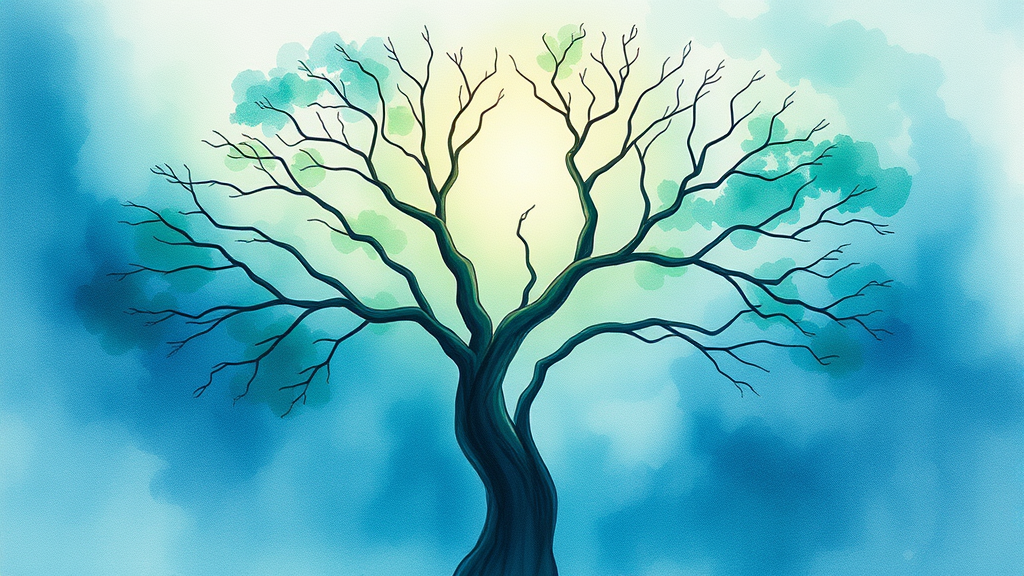
The leaves of your therapy tree represent the most visible and changeable aspects of your life—your daily experiences, emotions, thoughts, and immediate responses to situations. Unlike the more permanent structures of roots, trunk, and branches, leaves naturally cycle through seasons of growth, maturity, and release.
Understanding the leaf cycle in your therapy tree helps normalize the natural ebb and flow of emotional states and life circumstances. Just as trees shed their leaves in autumn without dying, you can learn to release outdated patterns, thoughts, or relationships that no longer serve your growth.
The therapeutic process often involves learning to observe your “leaves”—your immediate thoughts and feelings—without becoming overly attached to them or defining yourself by them. This mindful awareness allows you to respond rather than react to life’s challenges, creating space for more intentional choices.
Seasonal changes in your therapy tree acknowledge that healing isn’t always about constant growth and productivity. Sometimes, like trees in winter, you need periods of rest and consolidation. Mayo Clinic research emphasizes the importance of recognizing and honoring these natural cycles in mental health recovery.
Practical Applications in Therapy
Mental health professionals use the therapy tree concept in various practical ways to support their clients’ healing journeys. Art therapy sessions might involve drawing or creating physical representations of one’s therapy tree, allowing for non-verbal expression of complex emotions and experiences.
Therapists often guide clients through visualization exercises where they imagine tending to their therapy tree—watering the roots with self-care, strengthening the trunk through mindfulness practices, pruning unhealthy branches, and celebrating new growth. These exercises make abstract concepts tangible and actionable.
The therapy tree framework also helps in treatment planning and goal setting. Clients and therapists can identify which part of the tree needs attention—whether it’s strengthening foundational roots, building trunk stability, encouraging branch growth, or accepting natural cycles of change represented by the leaves.
For individuals working with healthcare teams that include various specialists, such as a physical therapy assistant or other therapeutic professionals, the tree metaphor provides a unifying framework that acknowledges how different aspects of healing interconnect and support each other.
Group therapy settings often use the therapy tree concept to explore how individual trees can form supportive forests, emphasizing the communal aspects of healing and the ways that personal growth contributes to collective well-being.
Creating Your Personal Therapy Tree
Developing your personal therapy tree begins with honest self-assessment and a willingness to examine all aspects of your life with compassion and curiosity. Start by reflecting on each component of your tree, considering what currently exists and what might need attention or development.
Begin with your roots by identifying your core values, support systems, and foundational practices that nourish your well-being. Consider what strengthens these roots—perhaps regular exercise, meditation, meaningful relationships, or connection to nature. Also acknowledge any root damage that might need healing, such as unresolved trauma or limiting beliefs.
Examine your trunk by assessing your emotional regulation skills, self-awareness, and overall sense of identity stability. Notice areas where you feel solid and confident, as well as places where you might feel shaky or uncertain. This honest assessment provides a roadmap for therapeutic work.
Look at your branches with curiosity about where you’re growing and where you might want to expand. Consider relationships, career development, creative pursuits, and other areas of life that bring meaning and connection. Some branches might need pruning, while others might need encouragement to grow.
Finally, observe your leaves with mindful awareness, noticing patterns in your thoughts, emotions, and daily experiences without judgment. Practice seeing these as natural, temporary expressions rather than permanent aspects of who you are.
Remember that creating and tending your therapy tree is an ongoing process that benefits from professional support when needed. Psychology Today research shows that nature-based therapeutic approaches can be particularly effective for individuals who resonate with organic metaphors for healing.
Frequently Asked Questions
What exactly is a therapy tree and how does it work?
A therapy tree is a therapeutic metaphor that uses the structure and growth patterns of trees to help individuals understand and work through their healing process. It works by providing a concrete, visual framework where the roots represent your foundation and support systems, the trunk symbolizes your core stability and identity, branches represent areas of growth and connection, and leaves represent daily thoughts and emotions. This metaphor helps make abstract psychological concepts more tangible and actionable.
Can I use the therapy tree concept without a professional therapist?
While you can certainly explore the therapy tree concept on your own through self-reflection and personal growth activities, working with a mental health professional can provide valuable guidance and support. Therapists can help you identify blind spots, work through challenging emotions safely, and develop specific strategies for strengthening different parts of your tree. However, the metaphor itself can be a useful tool for ongoing self-awareness and personal development between sessions.
How long does it take to see results using the therapy tree approach?
The timeline for seeing results varies greatly depending on individual circumstances, the specific challenges being addressed, and the consistency of therapeutic work. Like real trees, personal growth through the therapy tree approach is typically gradual and organic rather than linear. Some people notice increased self-awareness and emotional regulation within weeks, while deeper structural changes to roots and trunk stability may take months or years to develop fully.
Is the therapy tree approach suitable for children and adolescents?
Yes, the therapy tree concept can be particularly effective for children and adolescents because it provides a concrete, visual way to understand abstract emotional concepts. Young people often respond well to metaphorical thinking and can engage creatively with the tree imagery through art, storytelling, and imaginative exercises. The approach can be adapted for different developmental stages and combined with other therapeutic interventions as needed.
How does the therapy tree concept relate to different types of mental health conditions?
The therapy tree framework is flexible enough to address various mental health conditions by focusing on different aspects of the tree. For anxiety, work might focus on strengthening roots through grounding techniques and developing trunk stability through emotional regulation. For depression, attention might be given to nurturing new branch growth and accepting the natural cycles represented by leaves. For trauma, extensive root healing and trunk strengthening typically form the foundation of treatment.
Can the therapy tree approach be combined with medication or other treatments?
Absolutely. The therapy tree concept is a complementary approach that can enhance rather than replace other treatments. It provides a helpful framework for understanding how various interventions—whether medication, specialized therapies, lifestyle changes, or medical treatments—contribute to different aspects of your overall healing and growth. Many people find it helpful to visualize how each treatment supports different parts of their therapy tree.
What should I do if I feel like my therapy tree isn’t growing or is damaged beyond repair?
Feeling stuck or overwhelmed is a normal part of the healing process, much like how real trees sometimes experience periods of dormancy or need time to recover from damage. If you’re feeling this way, it’s important to seek professional support and remember that even severely damaged trees can often heal and grow with proper care and time. Sometimes what feels like lack of growth is actually important foundational work happening in the roots that isn’t yet visible above ground.

